Discover the living ecosystem that connects land, water and life.
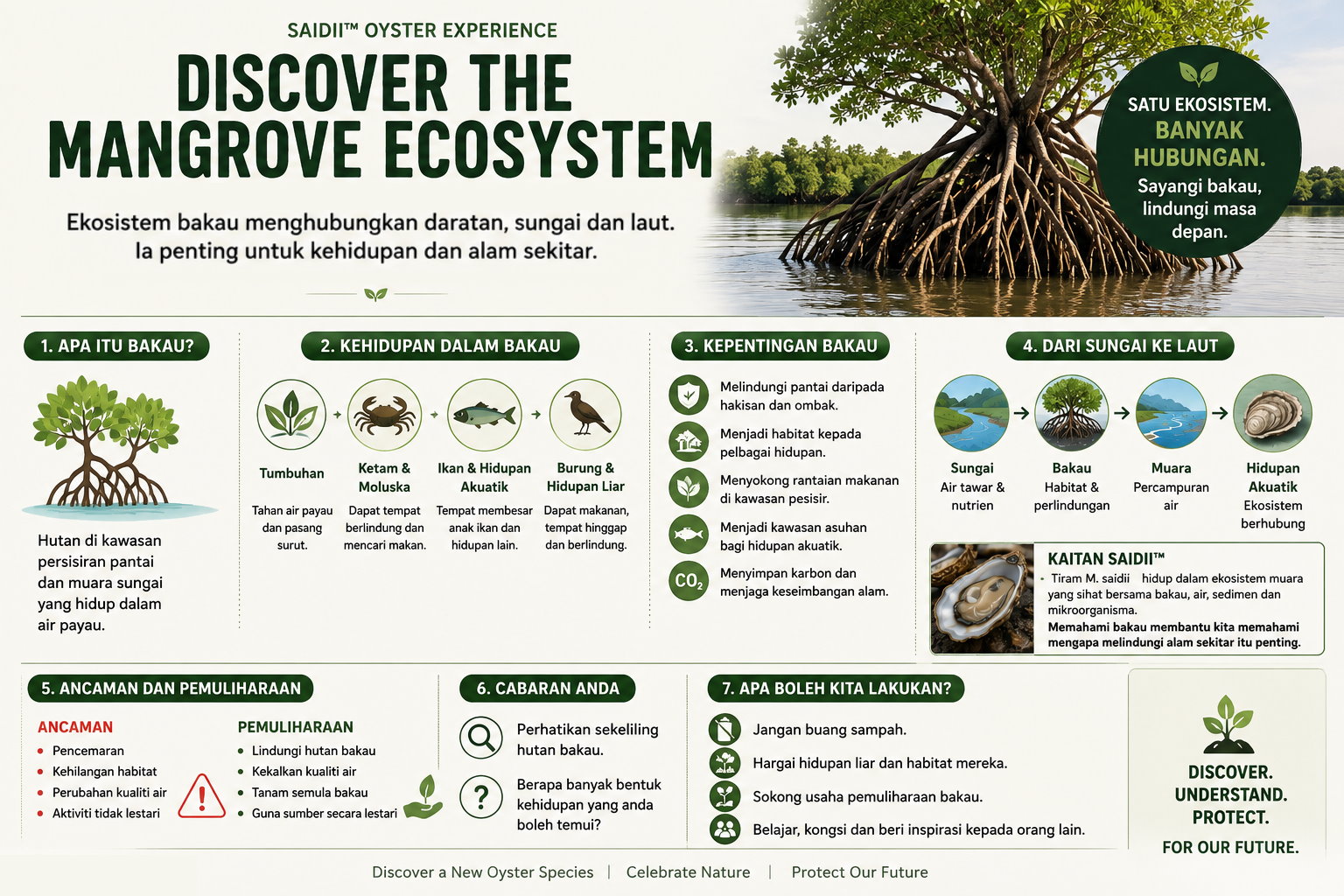
🌱 A Living Coastal Ecosystem
Mangroves are among the most important coastal ecosystems on Earth. They grow where land meets the sea, particularly in sheltered coastal areas, estuaries and river mouths.
More than just a collection of trees, a mangrove ecosystem is a complex living environment where plants, animals, water, soil and microorganisms interact with one another.
🦀 Life Among the Mangroves
Look closely and you will discover that mangrove forests are full of life. Their roots, mudflats and waterways provide shelter, feeding grounds and nursery areas for many organisms.
🌱 Mangrove Plants
Mangrove trees are specially adapted to survive in environments influenced by tides, changing salinity and waterlogged soils.
🦀 Crabs & Molluscs
Mudflats and mangrove roots provide important habitats for crabs, shellfish and other small aquatic organisms.
🐟 Fish & Aquatic Life
Mangrove waterways provide shelter and feeding areas for numerous aquatic species, especially during their early life stages.
🐦 Birds & Wildlife
Mangrove forests provide food, shelter and resting places for many species of birds and other wildlife.
🌊 Why Are Mangroves Important?
Mangrove ecosystems perform important environmental functions that connect the land, river and coastal waters.
- Protect the coastline — Mangrove vegetation can help reduce the impact of waves, currents and coastal erosion.
- Provide habitat — Mangrove roots and surrounding waters create shelter and living space for many organisms.
- Support food webs — Organic material produced in mangrove environments contributes to the wider coastal food web.
- Support nursery habitats — Mangrove associated waters can provide important nursery environments for juvenile aquatic animals.
- Store carbon — Mangrove ecosystems are recognised as important coastal ecosystems for carbon storage.
🌊 Where River Meets the Sea
Estuaries are places where freshwater from rivers meets and mixes with seawater. These environments create changing conditions of salinity, water movement and sediment.
This makes estuarine ecosystems highly dynamic. Mangroves are particularly well adapted to these changing coastal conditions.
🦪 From Mangrove to Oyster
At SAIDII™ OYSTER EXPERIENCE, we want you to look beyond the oyster itself.
An oyster is part of a much larger aquatic environment. Its life is connected to the water, sediments, microorganisms and other organisms that make up the estuarine ecosystem.
Understanding the mangrove ecosystem helps us understand why protecting coastal and estuarine environments matters.
🌱 Protecting the Ecosystem
A healthy mangrove ecosystem depends on the health of its surrounding environment.
Pollution, habitat loss, changes in water conditions and other environmental pressures can affect the organisms that depend on these ecosystems.
Conservation therefore begins with understanding. When we understand how the ecosystem works, we can make better decisions about how to protect it.
YOUR DISCOVERY CHALLENGE
👀 LOOK CLOSER
When you visit a mangrove ecosystem, stop for a moment and look carefully around you.
How many different forms of life can you discover?
Look at the roots, mud, water, leaves and surrounding habitat. Every part of the ecosystem tells a story.
🌏 ONE ECOSYSTEM. MANY CONNECTIONS.
The mangrove is not just a forest.It is a living connection between land, freshwater, the estuary,
the sea and the many forms of life that depend on them.
Discover the mangrove. Understand the ecosystem. Protect the future.
